Looking for a Minneapolis neighborhood where you can do more on foot and depend less on your car? Downtown East stands out for exactly that reason. If you want a home base near transit, parks, dining, events, and riverfront destinations, this area offers a practical way to simplify daily life. Let’s take a closer look at what car-free living in Downtown East can really look like.
Why Downtown East Works Without a Car
Downtown East has grown into one of the most walkable and transit-connected parts of Minneapolis. Meet Minneapolis describes the area as shifting from a mostly business-focused district into a more residential and entertainment-oriented neighborhood, especially around U.S. Bank Stadium.
That change matters if you want a car-light lifestyle. Instead of spreading daily destinations far apart, Downtown East clusters parks, entertainment venues, restaurants, museums, and transit in a relatively compact area. In practical terms, that means many errands and outings can start with a short walk instead of a drive.
Meet Minneapolis also notes that most of East Downtown and the Mill District are within walking distance of many downtown destinations. U.S. Bank Stadium Station sits near the center of that activity, which helps make the neighborhood feel connected rather than isolated.
Transit Options in Downtown East
If you plan to live with fewer car trips, transit access is one of the biggest factors to consider. Downtown East performs well here because it sits on both major light rail lines and connects to a wide range of bus routes.
Light Rail Access
Metro Transit says the METRO Blue and Green lines both serve U.S. Bank Stadium Station. Riders are dropped off right outside the stadium, placing you near the center of East Town and its surrounding destinations.
This setup gives you frequent all-day service for many everyday trips. Metro Transit states that METRO service runs at least every 15 minutes during most of the day, which makes it easier to plan around transit without feeling tied to a limited schedule.
Bus Connections
Downtown East also benefits from broad bus access. Metro Transit lists routes 3, 5, 7, 9, 14, and 22 nearby, along with the METRO C Line, METRO D Line, and METRO Orange Line.
For people commuting from or connecting through other parts of the city, additional routes tie into the Green Line. Metro Transit notes connections from routes 21, 63, 65, 67, 84, 87, and the A Line.
Transit Features That Help Daily Life
Reliable transit is not only about routes. Metro Transit says METRO stations include heating, added lighting, NexTrip real-time information, pay-at-the-station boarding, and improved security features.
Those details can make a real difference when you are commuting year-round in Minneapolis. They support a smoother routine, especially on colder days or when you need clear arrival information.
Getting Around Downtown for Less
Short downtown trips can be especially budget-friendly. Metro Transit offers a Downtown Zone fare of 50 cents, which can be used to reach most downtown stores, restaurants, and businesses.
A Downtown Zone ticket can be purchased at the station machine and used for one ride on the next METRO bus or light rail train. If your routine includes short hops across downtown, that low fare can make daily mobility more affordable.
Airport Access Without Driving
One of the strongest benefits of car-free living is when it works beyond your immediate neighborhood. Downtown East offers that advantage because the Blue Line connects to MSP Airport.
Metro Transit says the Blue Line runs to the airport, and airport service operates every 15 minutes during most of the day. If you travel for work, host visitors, or simply want easier airport access, this is a meaningful convenience.
Walking and Biking in Downtown East
Car-free living is often less about giving up driving completely and more about having good alternatives. In Downtown East, walking and biking are important parts of that mix.
Easy Short Trips
The neighborhood supports short walk-first routines because so many destinations sit close together. That includes major venues, green space, dining, museums, and riverfront access.
The City of Minneapolis has also made pedestrian-focused improvements in Downtown East, including new sidewalks, ADA-compliant pedestrian ramps, and street trees. The city is also evaluating nonmotorized links to the Hiawatha Light Rail Trail and the 11th Ave. S. bikeway.
Bike and Transit Together
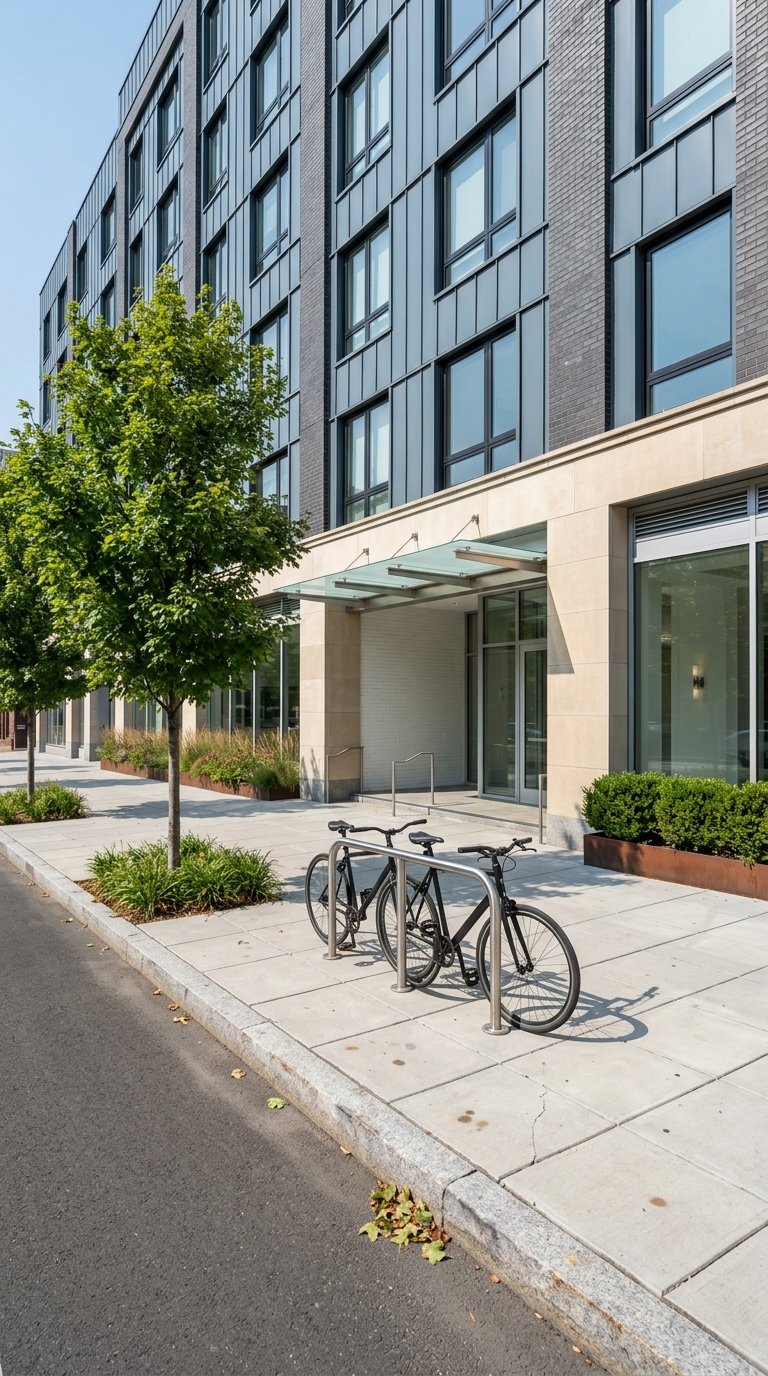
If you prefer a hybrid approach, Downtown East makes that easier too. Metro Transit says all buses and trains have free bicycle racks, which helps you combine biking and transit for longer or weather-sensitive trips.
That flexibility can be useful if you want to ride to a station, take transit to another part of the city, or shorten a longer commute. It also gives you more options without needing a car for every trip.
Parks and Riverfront Access
A car-free lifestyle often feels more sustainable when outdoor space is nearby. Downtown East has several notable parks and riverfront connections that support daily walks, exercise, and weekend downtime.
The Commons
The Commons is a 4.2-acre park serving Downtown East and Downtown West. According to the Minneapolis Park and Recreation Board, it is open from 6 a.m. to midnight.
For residents nearby, that gives you a central green space for walks, meeting friends, or simply getting outside without planning a drive. In a dense downtown setting, that kind of accessible park space adds real value.
Gold Medal Park
Gold Medal Park adds another major outdoor option close to Downtown East. The National Park Service describes it as a 7.5-acre park with a 32-foot mound and views of the Mississippi River, Stone Arch Bridge, Guthrie Theater, and the historic milling district.
That setting gives the neighborhood more than just convenience. It also adds visual character and places to unwind, which can make day-to-day urban living feel more balanced.
Stone Arch Bridge and Trails
The Stone Arch Bridge is one of the area’s most important walking and biking links. The Minneapolis Park and Recreation Board says the bridge was repaired in 2024 and 2025 and fully reopened in July 2025.
It connects people traveling by foot or bike between Father Hennepin Bluff Park, Mill Ruins Park, and West River Parkway. MPRB also places West River Parkway and East River Parkway within the broader Grand Rounds Scenic Byway system, which expands your options for longer outings along the river.
Everyday Amenities Nearby
A neighborhood only supports car-free living if daily life feels practical. Downtown East does well because it offers a dense mix of destinations within walking range.
Meet Minneapolis highlights nearby attractions and amenities including U.S. Bank Stadium, the Armory, Mill City Museum, the Guthrie Theater, the Commons, and the riverfront trail system. The area also includes eateries, entertainment options, a local weekend farmers market, and new condos.
That mix allows you to bundle multiple stops into one outing. You might pick up groceries at the market, walk the riverfront, meet friends for dinner, and head home without ever needing to move your car.
Mill City Farmers Market
For many residents, access to fresh food and local vendors is part of daily quality of life. The Mill City Farmers Market strengthens Downtown East’s car-free appeal because it provides a recurring, walkable shopping option.
The market says its year-round Saturday schedule includes outdoor markets from May through October next to the Guthrie Theater, with winter markets held inside Mill City Museum on select Saturdays. It features more than 100 local farmers, food makers, and artists.
Is a Car Necessary in Downtown East?
For many daily routines, a car can be helpful but not essential. The neighborhood’s transit access, walkability, bike connections, parks, and concentration of amenities create a setup that works well for people who are comfortable using light rail, buses, short walks, and bike trips.
That does not mean every lifestyle will feel the same here. Your experience will depend on where you work, how often you travel outside the core city, and how comfortable you are with seasonal weather and transit-based routines.
Still, Downtown East stands out as one of the stronger choices in Minneapolis if your goal is to reduce driving. It works especially well if you want to keep work, dining, recreation, and entertainment within a compact part of the city.
Who Downtown East Fits Best
Downtown East may be a strong fit if you want:
- Light rail access on both the Blue and Green lines
- Nearby bus connections in multiple directions
- Walkable access to parks, trails, and riverfront spaces
- Entertainment and dining close to home
- Airport access without needing to drive
- A neighborhood where short trips can often happen on foot or by transit
It can be especially appealing if you like the idea of living near event venues and cultural destinations while still having practical day-to-day mobility.
If you are comparing Minneapolis neighborhoods, Downtown East is worth a closer look for its balance of transit, green space, and everyday convenience. If you want help finding a home that fits your lifestyle in Minneapolis or the Twin Cities, connect with George L Massad for local guidance and a personalized home search.
FAQs
Is Downtown East Minneapolis good for car-free living?
- Yes. Downtown East is one of the stronger Minneapolis neighborhoods for car-free or car-light living because it offers light rail, bus access, walkable amenities, parks, and riverfront connections in a compact area.
What transit serves Downtown East Minneapolis?
- Downtown East is served by the METRO Blue and Green lines at U.S. Bank Stadium Station, along with several bus routes including routes 3, 5, 7, 9, 14, 22, the C Line, D Line, and Orange Line.
Can you get to MSP Airport from Downtown East without a car?
- Yes. Metro Transit says the Blue Line runs to MSP Airport, with trains arriving every 15 minutes during most of the day.
Are there parks near Downtown East Minneapolis?
- Yes. Downtown East is near the Commons, Gold Medal Park, the Stone Arch Bridge, and riverfront trail connections including West River Parkway.
Is Downtown East Minneapolis walkable for daily errands and outings?
- In many cases, yes. The neighborhood’s mix of transit, entertainment, restaurants, parks, and market access supports short walk-first trips for many everyday needs.