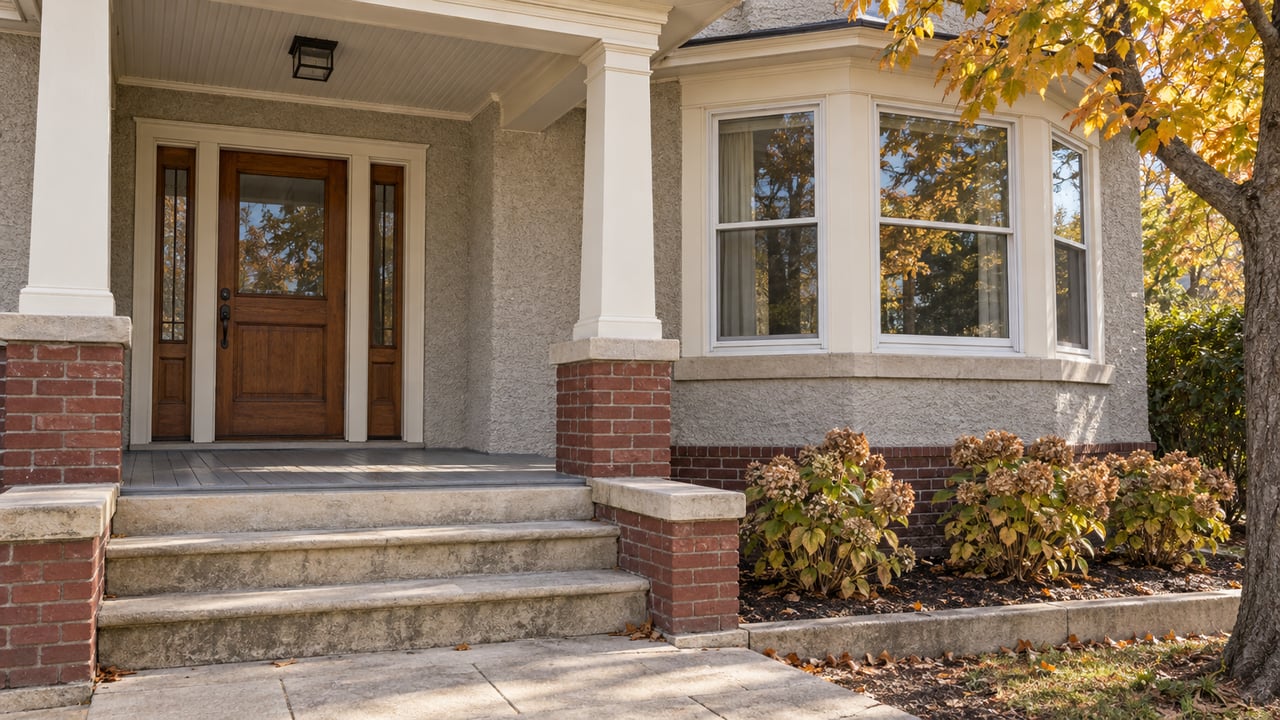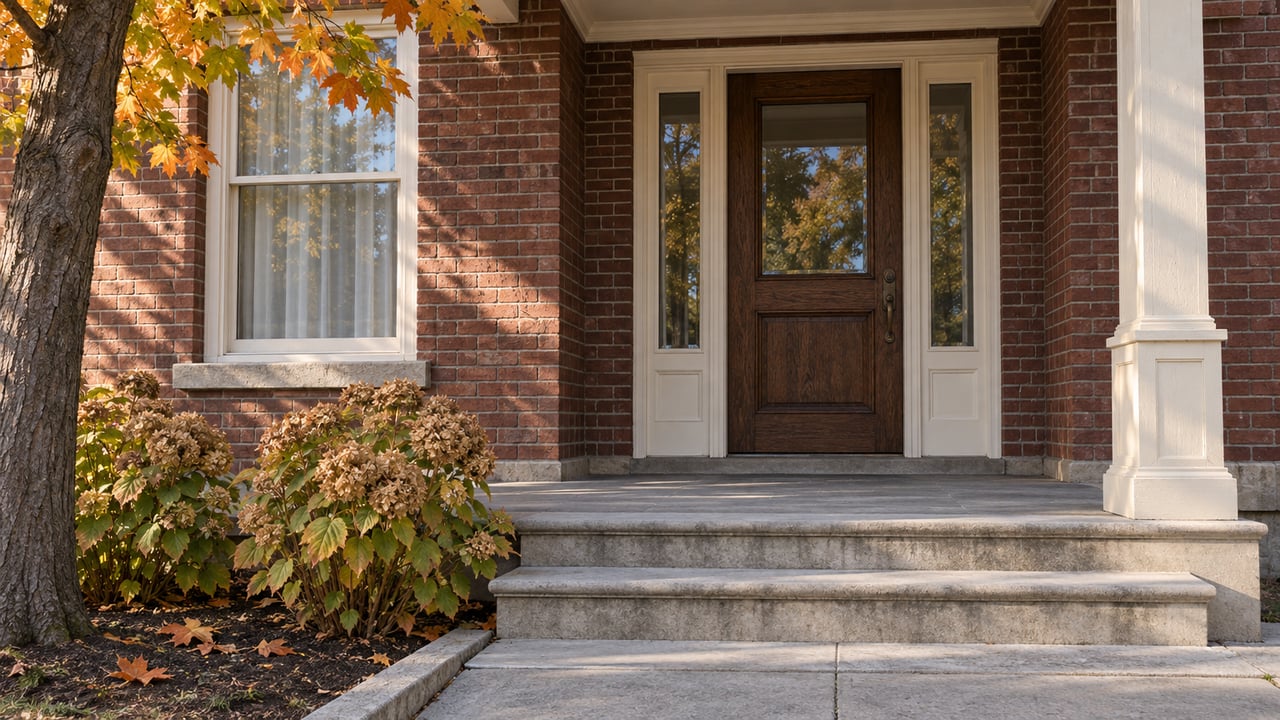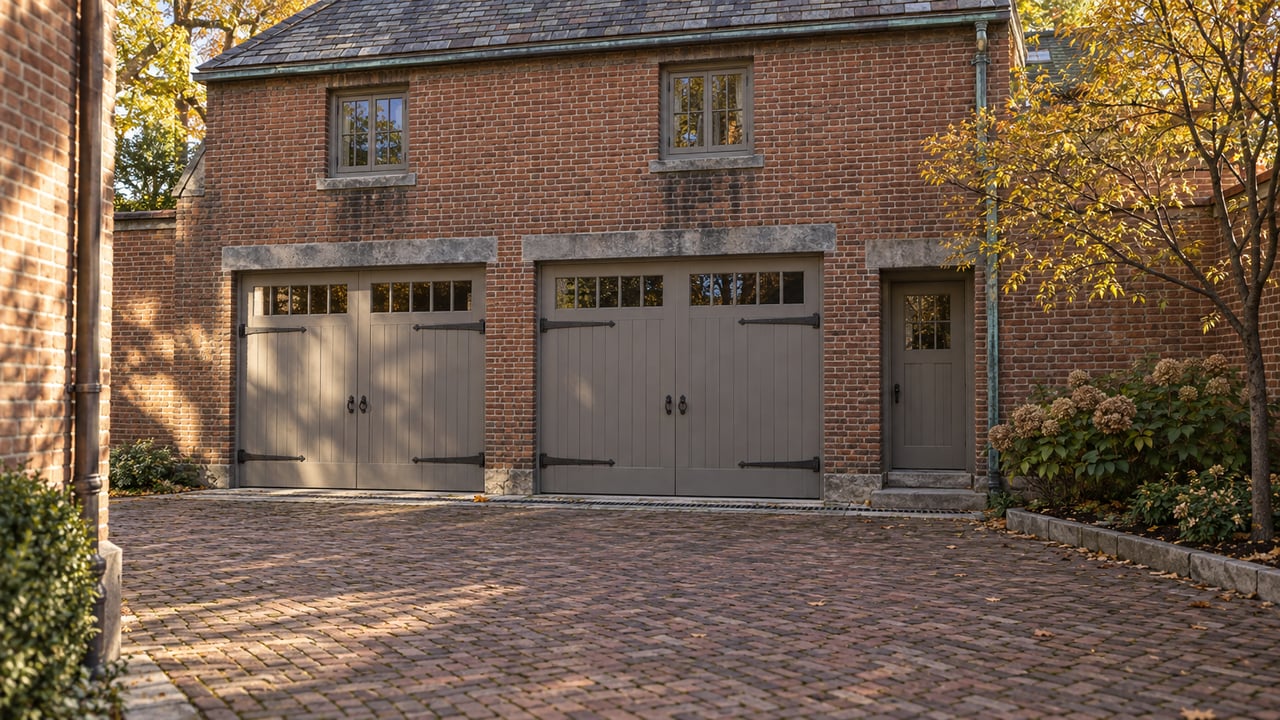
At 1005 Mount Curve Avenue, a 1906 Italian Renaissance residence built for Charles Gluek sits behind a restored ceramic tile roof and a facade of yellow brick, listed this year at $1,795,000. The listing description reads the way Mount Curve listings tend to read: leaded glass, period lighting, a sunroom with heated floors overlooking Thomas Lowry Park. Then, almost as an aside, it mentions a carriage house apartment above the two-car garage and an underground tunnel connecting the two structures.
That line does a lot of quiet work in a buyer's head. A carriage house apartment sounds like a guest suite, a rental unit, an in-law setup, extra square footage that should show up somewhere in the math. On a street built by lumber and milling money at the turn of the last century, carriage houses aren't rare. Another 1906 Mount Curve mansion on the same street, built for lumber baron Arthur Ross Rodgers, later came on the market in similarly restored condition. Estates like it were built with the servant quarters and outbuildings that era expected, not additions somebody bolted on later.
None of that tells you what an appraiser or a loan officer will actually do with it.
The Gap Between the Listing and the Loan File
A carriage house apartment is worth what a comparable sale says it's worth, and only if it was built or converted with permits. Mortgage lender JVM Lending, which underwrites financing on properties with accessory units regularly, describes the split plainly: units built with permits in a workmanlike manner command real value, while units without permits are often treated as storage and given minimal credit no matter what they cost to build. When there's genuine buyer demand for accessory units in a given market and enough comparable sales to prove it, an appraiser can support a six-figure adjustment. Without those comps, the same lender's experience puts a conservative estimate in the $25,000 to $50,000 range, which is a rounding error against a $1.8 million purchase price and nowhere close to what a Lowry Hill buyer might assume a second dwelling is worth.
Many underwriters go further and simply refuse to let an appraiser assign any value to unpermitted living space, regardless of how the market feels about it. The appraisal itself has to document that decision. Fannie Mae's own selling guide instructs appraisers to describe any accessory dwelling unit on the property and to address the impact on value and marketability directly, which means the report will say, in writing, whether that carriage house counted for anything at all.
The Paperwork Minneapolis Actually Requires
Before any of that appraisal math matters, there's a document question that a buyer or their agent can answer before an offer goes in, not after the inspection period starts. Minneapolis requires that internal accessory dwelling units have a covenant recorded with Hennepin County before the city will issue a building permit. That covenant runs with the land. It's meant to notify future buyers that the unit exists and under what restrictions, according to the city's own land use application guidance.
A carriage house is typically a detached structure rather than an internal conversion, and the city's ADU building requirements treat detached units under a separate set of standards. The practical takeaway is the same either way: the county record either shows a legal conversion with a permit history, or it doesn't. That record is public. Checking it costs nothing and takes less time than a home inspection.
On a block full of century-old carriage houses, the honest answer is that legal status varies house to house. Some were converted decades ago under whatever code existed at the time. Some were never converted at all and are still just garages with a finished loft nobody ever permitted. A listing description that says "carriage house apartment" is describing what's there physically. It isn't a claim about what the county has on file.
Why the Rental Income Doesn't Count the Way You'd Expect
If part of the appeal is the idea that the carriage house pays for itself, the financing rules are stricter than most buyers assume. Freddie Mac's guidance on accessory dwelling units states that projected rental income can only be used in a debt-to-income calculation if the lease payments are set to begin on or before the date the first mortgage payment is due. If the unit is still being renovated, or the lease hasn't started yet, that income doesn't count toward qualifying for the loan, no matter how confident everyone is that a tenant will show up.
This is a newer flexibility than it used to be. In 2023, HUD and the FHA changed policy to let lenders consider ADU income when assessing mortgage qualifications, something that wasn't previously allowed. That's a real shift, and it works in a buyer's favor, but only when the unit is legally converted, properly documented, and already producing income under a lease that's in place before closing. A vacant carriage house with good bones and no tenant doesn't help anyone qualify for anything.
Insurance follows a similar logic. If the plan is to use the unit as a short-term rental rather than a long-term tenancy, it's worth confirming coverage before listing it anywhere, since carriers underwrite nightly turnover differently than a standard lease and a platform's host guarantee isn't a substitute for a policy written for that use.
Before You Assume the Carriage House Adds Value
A few questions are worth answering before the number in your head becomes the number in your offer:
- Is there a recorded ADU covenant on file with Hennepin County for this property?
- Was the conversion done with a building permit, and is there a final inspection sign-off?
- Does the appraisal report describe the space as living area, or as accessory or storage space?
- If rental income is part of the plan, is there an active lease that starts before your first mortgage payment is due?
- If short-term rental is the plan instead, does the insurance policy actually cover that use?
None of these questions require a specialist. They require a records request and a conversation with your lender before the appraisal contingency deadline, not after.
FAQ
Does every Lowry Hill mansion with a carriage house have a legally permitted apartment? No. These structures date to a period before modern zoning and permitting existed in their current form, and status varies by property. The only way to know is to check the recorded history with Hennepin County rather than assume from the listing description.
Does this only apply to carriage houses, or any similar bonus space? The same appraisal logic applies to any accessory living space without a documented permit history, including finished basement suites and garage conversions that show up in other Lowry Hill and Kenwood-area homes from the same building era.
How does unpermitted space affect the appraisal? It can change how much value the appraisal will credit and what your lender will need to see. Knowing that before you write an offer changes how you negotiate price.
A carriage house on a street like Mount Curve is part of what makes these homes worth touring in the first place. Knowing what the bank will actually say about it is part of buying one with your eyes open. If you're weighing a Lowry Hill listing with a carriage house, guest house, or converted basement and want a straight read on how it's likely to appraise before you write an offer, Massad Real Estate can walk through the property's permit history with you and help you request a free home valuation before you get further into the process.
This article is general information, not legal, tax or financial advice. Consult a qualified professional about your situation.